
A bad smell coming from your RV air conditioner can quickly ruin an enjoyable camping trip. Musty or sour odors are especially common among RV owners, largely due to the unique operating environment of RVs—closed indoor spaces, high outdoor humidity, and constant movement during travel.
These conditions create the perfect environment for moisture buildup, mold growth, and bacterial contamination inside the AC system.
In this guide, we’ll walk through the most common types of RV AC odors, their root causes, step-by-step troubleshooting methods, daily maintenance tips, and a targeted solution for evaporator coil mold issues.
Common RV AC Smell Types
Identifying the type of odor coming from your RV air conditioner is the first step in diagnosing the issue, as different smells usually point to different underlying causes. The three most common RV AC odor types include:
- Musty / Damp Smell (Most Common)
Often smells like wet cardboard or mildew, a sign of mold and bacteria growth.
- Sour / Rotten Smell
Similar to spoiled food, sour milk, or a stale acidic odor. This is usually caused by trapped moisture combined with prolonged bacterial buildup inside the AC unit or ductwork.
- Plastic / Burning Smell (Warning Sign)
A sharp smell resembling melting plastic or burnt wiring. This may indicate overheating electrical components or mechanical issues and should be treated as a potential safety hazard. The system should be turned off immediately and inspected by a professional.

Main Causes of Bad Odors
RV air conditioner odors are often linked to the unique operating conditions of RVs, including limited ventilation, frequent movement during travel, and fluctuating humidity levels. The most common causes include:
- Stagnant Condensation Water
When the RV is in motion, bumpy roads block the external drain outlet, leaving standing water that breeds bacteria and mold, causing musty and sour odors.
- Dirty & Clogged Air Filters
Air filters in RV AC systems easily collect dust, pollen, and outdoor debris. When combined with moisture, these particles can trap humidity and create conditions for bacterial growth and microbial fermentation, resulting in unpleasant odors circulating through the cabin.
- Moldy Evaporator Coil
The evaporator coil is one of the most moisture-prone components in an RV air conditioner. Because it is difficult to access and often remains damp in closed RV environments, it can develop hidden mold over time. This is one of the most common sources of long-lasting musty RV AC smells.
- Mechanical & Electrical Faults
In some cases, odors may come from overheating components such as the compressor, motor, or wiring. These issues often produce a plastic-like or burning smell and may indicate an electrical fault. This should be treated as a safety risk, and the system should be turned off immediately for inspection.
How to Fix RV AC Odors Step by Step
Different types of RV air conditioner odors require different troubleshooting approaches. Below are targeted solutions based on the specific smell type:
1.Plastic / Burning Smell
Immediately turn off the air conditioner and stop using it. For safety reasons, the system should be inspected by a qualified RV technician before being used again.
2. Sour / Rotten Smell
Start by cleaning deeply or replacing the air filter, then make sure the drain line is fully cleared to allow proper condensation drainage. After cleaning, run the system in fan-only mode for at least 30 minutes to help dry out internal moisture and reduce bacterial growth.
3. Musty / Damp Smell
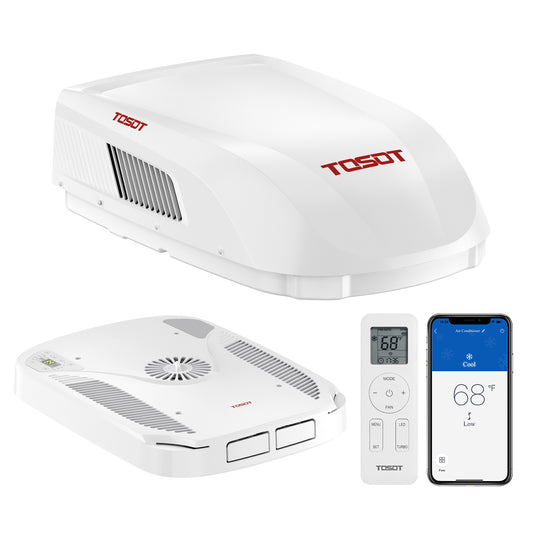
Keep the evaporator clean and dry. While filters and drainage can be maintained by users, the evaporator coil itself is difficult to access and clean directly. As a result, some HVAC manufacturers, such as TOSOT, are exploring a dedicated UV sterilizer lamp for RV air conditioners to disinfect the evaporator effectively. Stay tuned to our latest news if you are interested in this product.
4. General Maintenance (Outdoor Unit Cleaning)
Clean the condenser and base area periodically to remove dust, leaves, and debris. This helps maintain proper heat exchange efficiency and reduces the likelihood of moisture and odor buildup inside the system.
TOSOT Daily Maintenance Tips to Prevent RV AC Odors
Regular maintenance is the most effective way to prevent unpleasant odors in your RV air conditioning system. Follow these simple preventive steps:
1. Dry the System Properly Based on the Season
In cooler months, heating mode can help evaporate moisture more effectively. In warmer or humid conditions, run fan-only mode for at least 30 minutes to remove residual condensation and reduce the risk of mold and bacteria growth.
2. Clean Air Filters Regularly
If you use your RV frequently, clean or replace the air filters every 2–3 weeks. Dirty filters can trap moisture and airborne particles, creating conditions that lead to musty odors.
3. Maintain the Outdoor Unit Periodically
Every 1–3 months, inspect the outdoor unit and remove accumulated debris such as leaves, dust, and dirt. Cleaning the condenser helps maintain proper heat exchange and reduces moisture retention inside the system.
4. Prepare the System for Long-Term Storage
Before storing your RV, ensure the air conditioner and vents are completely dry. Use a dust cover for the unit, close all doors and windows, and allow periodic ventilation to prevent stale air buildup.
5. Run the System During Idle Periods
Run the AC for over 30 minutes every 1–3 months during long idle periods. This helps keep internal components active and reduces the risk of stagnant moisture buildup.

Conclusion
Most RV AC odors are caused by moisture buildup, dirty filters, and mold on the evaporator coil. Regular cleaning and proper drying can help prevent most issues.
For persistent evaporator concerns, UV-C light technology is being explored in HVAC systems to help reduce mold and improve air quality in enclosed spaces like RVs.
If you notice a burning or plastic smell, turn off the system immediately and contact a qualified HVAC technician.
Have any RV AC odor tips? Share them in the comments below.